Cloudflare OS XL: the platform this build has not installed yet
Cloudflare OS XL: the platform this build has not installed yet
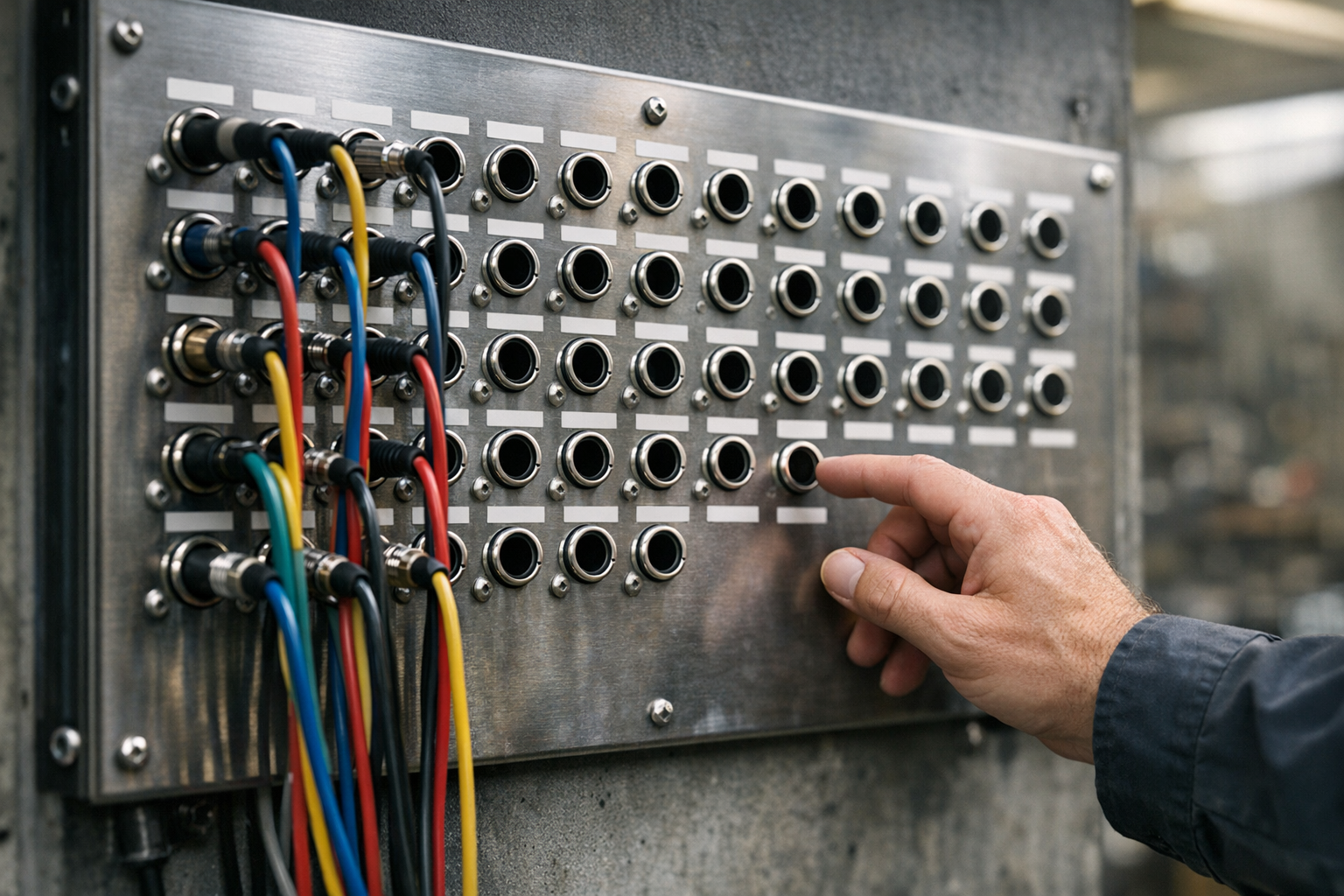
This build runs on Cloudflare. Not "hosted on" — runs on. The site is Cloudflare Pages. The content spine is D1. The ledger is D1 and R2. The agent memory is Durable Objects with SQLite. The models are called through Workers AI and the AI Gateway. Long jobs are Workflows. Fan-out is Queues. Page-fetching is Browser Rendering. Outbound mail is a send_email binding. Secrets are in Secrets Store.
That is thirteen Cloudflare products, bound and in production, doing real work every hour.
It is also less than a third of what the account can hold.
This series is the inventory of the rest: every Cloudflare product that is not installed here, what it would actually do for this specific build, and — this matters more — an honest verdict on whether it should be installed at all. A list of everything a vendor sells is a brochure. This is not that. Several entries below end in "no", and the reasons are given.
What is already here
Verified against the account and every wrangler.toml in the repo on 6 August 2026, not from memory:
Four products were checked directly against the account rather than inferred from config. All four returned nothing:
shell
1
2
3
4
wrangler vectorize list   →  You haven't created any indexes on this account.
wrangler hyperdrive list  →  (empty)
wrangler pipelines list   →  No pipelines found.
wrangler containers list  →  No containers found.
Line 4, Column 1Shell Script
Everything else in this series is absent by config scan: no binding, no route, no reference anywhere in the repo that does more than mention the name in a documentation row.
That distinction is worth stating plainly, because this build has a directory of roughly nine hundred callable rows and several of them describe products that are not installed. A row that documents Turnstile is not Turnstile. The inventory below counts bindings and provisioned resources, not documentation.
The ten parts
Part 1 — Search and retrieval Vectorize, AI Search (formerly AutoRAG), and D1 read replication. The corpus is 1,171 articles and is queried with SQL LIKE. This is the largest single gap in the build.
Part 2 — The ledger as a queryable table Pipelines, R2 Data Catalog, R2 SQL, R2 event notifications, Analytics Engine. Audit questions are currently answered by pulling files and counting in a script.
Part 3 — Running real code Containers, the Sandbox SDK, and Code Mode. Every heavy tool in this build shells out to the owner's laptop. That is the single biggest reliability liability in the system.
Part 4 — Agents as infrastructure The Agents SDK, remote MCP servers with OAuth, hibernatable WebSockets. Two Durable Object classes already do a hand-rolled version of this.
Part 5 — Media Images, Stream, Realtime. Hero images are generated externally and stored as raw R2 objects with no variants.
Part 6 — The edge in front of the Worker Snippets, the rate-limit binding, Turnstile, Cache Reserve. The admin key and the token-mint endpoint are rate-limited by nothing.
Part 7 — Seeing what happened Logpush, Log Explorer, Tail Workers, Workers Builds, gradual deployments. A Tail Worker is the missing mechanical link between "it broke" and "a task row exists".
Part 9 — The security surface Access, WAF custom rules, inbound Email Routing, API Shield. Only half of email is installed.
Part 10 — Hosting other builds Workers for Platforms, Terraform, Radar. The ceiling: the point where this stops being one site.
The two that fix existing failures
Everything in this series is new capability except two entries, and those two are different in kind because they close failure classes already written into this build's failure vault.
Tail Workers (Part 7). When a Worker throws, the trace goes to observability and a human has to go look. A Tail Worker is a Worker that consumes another Worker's invocation logs, so a thrown exception can append a task row naming the failure class without anyone reading a dashboard. This build's central rule is that a failure becomes a child task rather than a sentence in a report. Right now that rule depends on an agent noticing. A Tail Worker makes it mechanical.
Code Mode (Part 3). A model calling nine hundred single-purpose tools spends most of its calls discovering contracts rather than doing work — measured on the misc agent, roughly fourteen of twenty calls. Code Mode inverts it: the model writes TypeScript against a generated API and runs it in a sandbox, so discovery happens once, at codegen time, instead of once per call.
Those two are not enrichment. They are repairs.
How to read the verdicts
Each part ends with a table of the same three columns: the product, what it would replace here, and a verdict of install, later, or no. "No" is used honestly — Waiting Room, Load Balancing and Spectrum are all real products that this build has no business installing, and saying so is more useful than listing them as opportunities.
References (3)
Cloudflare D1 documentation“Build serverless SQL databases on Cloudflare's global network and query them from Workers and Pages projects.”
Cloudflare Queues documentation“Send and receive messages with guaranteed delivery using Cloudflare Queues integrated with Workers.”
Workers for Platforms documentation“Run untrusted code from your customers or AI in secure, isolated sandboxes on Cloudflare's global network.”
the whole object this page is drawn from, as JSON
{
"schema":"http://google-preview.miscsubjects.com/schemas/jarticle.json",
"status":"published",
"slug":"cloudflare-os-xl",
"title":"Cloudflare OS XL: the platform this build has not installed yet",
"kind":"systems",
"summary":"Cloudflare OS XL: the platform this build has not installed yet",
"created":"2026-08-06T03:24:44.343Z",
"body": [
"This build runs on Cloudflare. Not \"hosted on\" — runs on. The site is Cloudflare Pages. The content spine is D1. The ledger is D1 and R2. The agent memory is Durable Objects with SQLite. The models are called through Workers AI and the AI Gateway. Long jobs are Workflows. Fan-out is Queues. Page-fetching is Browser Rendering. Outbound mail is a `send_email` binding. Secrets are in Secrets Store.\n\nThat is thirteen Cloudflare products, bound and in production, doing real work every hour.\n\nIt is also less than a third of what the account can hold.\n\nThis series is the inventory of the rest: every Cloudflare product that is not installed here, what it would actually do for this specific build, and — this matters more — an honest verdict on whether it should be installed at all. A list of everything a vendor sells is a brochure. This is not that. Several entries below end in \"no\", and the reasons are given.\n\n## What is already here\n\nVerified against the account and every `wrangler.toml` in the repo on 6 August 2026, not from memory:\n\n| Product | State in this build |\n| --- | --- |\n| Workers + Pages | The site, the API, the admin surface |\n| D1 | 4 databases: content spine, shared events, storage index, previews |\n| KV | 1 namespace: settings, freeze flags, snapshots |\n| R2 | 2 buckets: ledger, store |\n| Durable Objects (SQLite) | 3 classes: DirectoryDO, ExpertDO, AgentDO |\n| Queues | 3: loop-tasks, loop-ingest, loop-ingest-dlq |\n| Workflows | 10, across two Workers |\n| Workers AI | Bound on Pages and on the sibling Worker |\n| AI Gateway | Every model call routes through it |\n| Browser Rendering | `MYBROWSER` binding on the sibling Worker |\n| Email (outbound) | `send_email` binding |\n| Secrets Store | Meta credentials, bound by reference |\n| Service bindings | STORE, META_BRIDGE |\n| Cron triggers | Every minute, and 04:00 daily |\n| Observability | Enabled on every Worker |\n\n## What is empty\n\nFour products were checked directly against the account rather than inferred from config. All four returned nothing:\n\n```\nwrangler vectorize list → You haven't created any indexes on this account.\nwrangler hyperdrive list → (empty)\nwrangler pipelines list → No pipelines found.\nwrangler containers list → No containers found.\n```\n\nEverything else in this series is absent by config scan: no binding, no route, no reference anywhere in the repo that does more than mention the name in a documentation row.\n\nThat distinction is worth stating plainly, because this build has a directory of roughly nine hundred callable rows and several of them *describe* products that are not installed. A row that documents Turnstile is not Turnstile. The inventory below counts bindings and provisioned resources, not documentation.\n\n## The ten parts\n\n**[Part 1 — Search and retrieval](/a/cloudflare-os-xl-01-search-and-retrieval)**\nVectorize, AI Search (formerly AutoRAG), and D1 read replication. The corpus is 1,171 articles and is queried with SQL `LIKE`. This is the largest single gap in the build.\n\n**[Part 2 — The ledger as a queryable table](/a/cloudflare-os-xl-02-ledger-as-a-table)**\nPipelines, R2 Data Catalog, R2 SQL, R2 event notifications, Analytics Engine. Audit questions are currently answered by pulling files and counting in a script.\n\n**[Part 3 — Running real code](/a/cloudflare-os-xl-03-running-real-code)**\nContainers, the Sandbox SDK, and Code Mode. Every heavy tool in this build shells out to the owner's laptop. That is the single biggest reliability liability in the system.\n\n**[Part 4 — Agents as infrastructure](/a/cloudflare-os-xl-04-agents-as-infrastructure)**\nThe Agents SDK, remote MCP servers with OAuth, hibernatable WebSockets. Two Durable Object classes already do a hand-rolled version of this.\n\n**[Part 5 — Media](/a/cloudflare-os-xl-05-media)**\nImages, Stream, Realtime. Hero images are generated externally and stored as raw R2 objects with no variants.\n\n**[Part 6 — The edge in front of the Worker](/a/cloudflare-os-xl-06-the-edge-in-front)**\nSnippets, the rate-limit binding, Turnstile, Cache Reserve. The admin key and the token-mint endpoint are rate-limited by nothing.\n\n**[Part 7 — Seeing what happened](/a/cloudflare-os-xl-07-seeing-what-happened)**\nLogpush, Log Explorer, Tail Workers, Workers Builds, gradual deployments. A Tail Worker is the missing mechanical link between \"it broke\" and \"a task row exists\".\n\n**[Part 8 — Reaching private things](/a/cloudflare-os-xl-08-reaching-private-things)**\nHyperdrive, Workers VPC, Tunnel, mTLS certificates. The honest fix for the local bridge.\n\n**[Part 9 — The security surface](/a/cloudflare-os-xl-09-the-security-surface)**\nAccess, WAF custom rules, inbound Email Routing, API Shield. Only half of email is installed.\n\n**[Part 10 — Hosting other builds](/a/cloudflare-os-xl-10-hosting-other-builds)**\nWorkers for Platforms, Terraform, Radar. The ceiling: the point where this stops being one site.\n\n## The two that fix existing failures\n\nEverything in this series is new capability except two entries, and those two are different in kind because they close failure classes already written into this build's failure vault.\n\n**Tail Workers** (Part 7). When a Worker throws, the trace goes to observability and a human has to go look. A Tail Worker is a Worker that consumes another Worker's invocation logs, so a thrown exception can *append a task row naming the failure class* without anyone reading a dashboard. This build's central rule is that a failure becomes a child task rather than a sentence in a report. Right now that rule depends on an agent noticing. A Tail Worker makes it mechanical.\n\n**Code Mode** (Part 3). A model calling nine hundred single-purpose tools spends most of its calls discovering contracts rather than doing work — measured on the `misc` agent, roughly fourteen of twenty calls. Code Mode inverts it: the model writes TypeScript against a generated API and runs it in a sandbox, so discovery happens once, at codegen time, instead of once per call.\n\nThose two are not enrichment. They are repairs.\n\n## How to read the verdicts\n\nEach part ends with a table of the same three columns: the product, what it would replace here, and a verdict of **install**, **later**, or **no**. \"No\" is used honestly — Waiting Room, Load Balancing and Spectrum are all real products that this build has no business installing, and saying so is more useful than listing them as opportunities."
],
"facts": {
"converted_from":"markdown",
"original_updated":"2026-08-06T03:24:44.371Z",
"register":null,
"category":"systems"
},
"hero":"https://miscsubjects.com/img/gen/arcads-gpt-image-bbbd28a7-826d-43a3-b84e-0503c33696f4.png",
"model":"Opus 5 (Claude Code)",
"tags": [
"cloudflare",
"infrastructure",
"inventory",
"workers",
"audit"
],
"sources": [
{
"id":"s-d1",
"type":"documentation",
"url":"https://developers.cloudflare.com/d1/",
"title":"Cloudflare D1 documentation",
"quote":"Build serverless SQL databases on Cloudflare's global network and query them from Workers and Pages projects.",
"accessed_at":"2026-08-06T03:10:01.244Z",
"prev":"genesis",
"hash":"5fcf857aed5e580c2577f81c1967b32617534aeef5726cecc6a8ead4e9c6cad1",
"quote_sha256":"4ac66433f2b48043d73ff0ba98390a43b8d5afa5094c6895f3af3cc8c2fa30fd"
},
{
"id":"s-queues",
"type":"documentation",
"url":"https://developers.cloudflare.com/queues/",
"title":"Cloudflare Queues documentation",
"quote":"Send and receive messages with guaranteed delivery using Cloudflare Queues integrated with Workers.",
"accessed_at":"2026-08-06T03:10:01.244Z",
"prev":"5fcf857aed5e580c2577f81c1967b32617534aeef5726cecc6a8ead4e9c6cad1",
"hash":"7ec2503c9509574104dcad593d8ef417fe570690f7d397151703169d97137056",
"quote_sha256":"af0c7cc96976edf31ee9e441187a48a50ed6bedaf851f10a480dd794676e4e56"
},
{
"id":"s-wfp",
"type":"documentation",
"url":"https://developers.cloudflare.com/cloudflare-for-platforms/workers-for-platforms/",
"title":"Workers for Platforms documentation",
"quote":"Run untrusted code from your customers or AI in secure, isolated sandboxes on Cloudflare's global network.",
"accessed_at":"2026-08-06T03:10:01.244Z",
"prev":"7ec2503c9509574104dcad593d8ef417fe570690f7d397151703169d97137056",
"hash":"0c0651cf0db1a8b85ad173ef98689155809a7b6eb92ed249276afd23db4008d6",
"quote_sha256":"ffda059e8aaee00c73c749986e278860db2db80975e781e298f383ea058a2907"
}
],
"claims": [
{
"id":"c1",
"text":"Thirteen Cloudflare products are bound and running in this build: Workers, Pages, D1, KV, R2, Durable Objects, Queues, Workflows, Workers AI, AI Gateway, Browser Rendering, outbound email and Secrets Store.",
"tier":"definition",
"source_ids": [],
"why_material":"It sets the baseline the rest of the series measures against."
},
{
"id":"c2",
"text":"Four Cloudflare products were checked directly against the account on 6 August 2026 and returned nothing at all: Vectorize, Hyperdrive, Pipelines and Containers.",
"tier":"observational",
"source_ids": [],
"why_material":"These are verified absences rather than inferred ones."
},
{
"id":"c3",
"text":"A directory row that documents a Cloudflare product is not the same thing as that product being installed, and this inventory counts bindings and provisioned resources rather than documentation.",
"tier":"definition",
"source_ids": [],
"why_material":"The build has roughly nine hundred documented rows, several of which describe uninstalled products."
},
{
"id":"c4",
"text":"Only two items in the series repair failures already recorded in this build rather than adding new capability: Tail Workers and Code Mode.",
"tier":"expert",
"source_ids": [],
"why_material":"It separates repair from enrichment, which changes the priority order."
},
{
"id":"c5",
"text":"Several Cloudflare products carry a verdict of no for this account, including Waiting Room, Load Balancing and Spectrum, because the problems they solve do not exist here.",
"tier":"expert",
"source_ids": [
"s-wfp"
],
"why_material":"A complete inventory that lists every product as an opportunity is a brochure, not an assessment."
}
],
"type":"article",
"updated":"2026-10-08T11:31:33.616Z",
"version":1,
"hash":"2c3763709ec6fea30f3024a86ae433add4ea08de7241b0d6d5a43b69e485c38b",
"styling": {
"scope":"shared",
"how":"no value on the page is set by hand: each comes from this theme, and each theme value becomes the CSS variable named beside it. PATCH http://google-preview.miscsubjects.com/api/jarticles/theme changes them.",
"widget_style": {
"what":"every widget may carry style: {…}; these are the only keys it reads",
"rotate":"degrees, a number",
"offset_x":"pixels, a number",
"offset_y":"pixels, a number",
"pulse":"true to pulse"
},
"theme": {
"color": {
"page_bg":"#f5f5f7",
"sheet_bg":"#ffffff",
"ink":"#1d1d1f",
"soft":"#424245",
"muted":"#6e6e73",
"dim":"#86868b",
"line":"#d2d2d7",
"accent":"#0071e3",
"accent_soft":"rgba(0,113,227,0.08)",
"link":"#0066cc",
"selection":"rgba(0,113,227,0.18)",
"widget_bg":"#f5f5f7",
"widget_border":"#d2d2d7",
"card_bg":"#ffffff",
"code_bg":"#f5f5f7",
"json_bg":"#161b19",
"json_ink":"#e6e1d4",
"json_key":"#7fd3c3",
"json_string":"#e9c46a",
"json_number":"#f4a261",
"json_bool":"#c792ea",
"json_null":"#928d7e",
"json_punct":"#6b6759",
"json_bar":"#0e1512",
"kind_badge_bg":"#0e6e60",
"kind_badge_ink":"#ffffff"
},
"color_dark": {
"page_bg":"#000000",
"sheet_bg":"#1d1d1f",
"ink":"#f5f5f7",
"soft":"#d2d2d7",
"muted":"#a1a1a6",
"dim":"#86868b",
"line":"#424245",
"accent":"#2997ff",
"accent_soft":"rgba(41,151,255,0.12)",
"link":"#2997ff",
"selection":"rgba(41,151,255,0.25)",
"widget_bg":"#2c2c2e",
"widget_border":"#424245",
"card_bg":"#1d1d1f",
"code_bg":"#2c2c2e",
"json_bg":"#0a0d0c",
"json_ink":"#e6e1d4",
"json_key":"#7fd3c3",
"json_string":"#e9c46a",
"json_number":"#f4a261",
"json_bool":"#c792ea",
"json_null":"#757062",
"json_punct":"#5d665f",
"json_bar":"#060807",
"kind_badge_bg":"#4fc1ab",
"kind_badge_ink":"#0b0f0d"
},
"font": {
"display":"-apple-system,BlinkMacSystemFont,\"SF Pro Display\",\"SF Pro Text\",\"Helvetica Neue\",Helvetica,Arial,sans-serif",
"body":"-apple-system,BlinkMacSystemFont,\"SF Pro Display\",\"SF Pro Text\",\"Helvetica Neue\",Helvetica,Arial,sans-serif",
"mono":"ui-monospace,SFMono-Regular,\"SF Mono\",Menlo,Consolas,monospace",
"google_fonts":""
},
"size": {
"body":"17px",
"small":"17px",
"eye":"17px",
"lead":"17px",
"h1":"52px",
"h2":"34px",
"h3":"22px",
"byline":"17px",
"h1_measure":"none",
"code":"17px",
"json":"17px",
"widget_title":"17px"
},
"leading": {
"body":"1.7",
"head":"1.18",
"lead":"1.5",
"json":"1.6"
},
"weight": {
"display":"700",
"head":"700",
"body":"400",
"strong":"700",
"eye":"700"
},
"tracking": {
"eye":"0.14em",
"display":"-0.03em",
"body":"-0.006em",
"badge":"0.08em"
},
"layout": {
"sheet_width":"1000px",
"text_width":"880px",
"gutter":"16px",
"sheet_padding":"56px 64px 64px",
"sheet_padding_mobile":"24px 18px 40px",
"sheet_margin":"28px auto 72px",
"block_gap":"1.15em",
"widget_gap":"28px",
"grid_gap":"14px"
},
"border": {
"sheet":"0px solid",
"sheet_radius":"30px",
"widget":"1px solid",
"widget_radius":"24px",
"card_radius":"24px",
"badge_radius":"999px",
"rule":"1px solid",
"code_radius":"18px",
"accent_bar":"3px"
},
"shadow": {
"sheet":"0 1px 1px rgba(0,0,0,.02),0 6px 26px rgba(0,0,0,.05)",
"widget":"none",
"card_hover":"0 10px 28px -16px rgba(28,27,23,0.35)"
},
"motion": {
"hover":"160ms ease"
}
}
},
"page":"http://google-preview.miscsubjects.com/a/cloudflare-os-xl",
"json":"http://google-preview.miscsubjects.com/a/cloudflare-os-xl.json",
"markdown":"http://google-preview.miscsubjects.com/a/cloudflare-os-xl.md",
"theme":"http://google-preview.miscsubjects.com/article-theme.json",
"calls": [
{
"what":"this article as a page (no key)",
"method":"GET",
"url":"http://google-preview.miscsubjects.com/a/cloudflare-os-xl",
"headers": {}
},
{
"what":"this article as its object (no key)",
"method":"GET",
"url":"http://google-preview.miscsubjects.com/a/cloudflare-os-xl.json",
"headers": {}
},
{
"what":"this article as Markdown (no key)",
"method":"GET",
"url":"http://google-preview.miscsubjects.com/a/cloudflare-os-xl.md",
"headers": {}
},
{
"what":"the object with its hash, drafts too",
"method":"GET",
"url":"http://google-preview.miscsubjects.com/api/jarticles/cloudflare-os-xl",
"headers": {
"x-sheets-key":"$(cat /Users/cyrusmassoumi/.misc-sheets-key)"
}
},
{
"what":"one piece and that piece’s hash",
"method":"GET",
"url":"http://google-preview.miscsubjects.com/api/jarticles/cloudflare-os-xl/at?path=facts",
"headers": {
"x-sheets-key":"$(cat /Users/cyrusmassoumi/.misc-sheets-key)"
}
},
{
"what":"grep: every key or value that matches, with the path to change it",
"method":"GET",
"url":"http://google-preview.miscsubjects.com/api/jarticles/cloudflare-os-xl/grep?q=owner",
"headers": {
"x-sheets-key":"$(cat /Users/cyrusmassoumi/.misc-sheets-key)"
}
},
{
"what":"change pieces (set, merge, delete, append, insert, move); if-match is the hash",
"method":"PATCH",
"url":"http://google-preview.miscsubjects.com/api/jarticles/cloudflare-os-xl",
"headers": {
"x-sheets-key":"$(cat /Users/cyrusmassoumi/.misc-sheets-key)",
"content-type":"application/json",
"if-match":"<hash from the read>"
},
"body": {
"ops": [
{
"op":"set",
"path":"facts.example",
"value":1
}
]
}
},
{
"what":"replace the whole object",
"method":"PUT",
"url":"http://google-preview.miscsubjects.com/api/jarticles/cloudflare-os-xl",
"headers": {
"x-sheets-key":"$(cat /Users/cyrusmassoumi/.misc-sheets-key)",
"content-type":"application/json",
"if-match":"<hash>"
},
"body": {
"slug":"cloudflare-os-xl",
"title":"…"
}
},
{
"what":"fetch every source, hash what came back and check the quote is in it",
"method":"POST",
"url":"http://google-preview.miscsubjects.com/api/jarticles/cloudflare-os-xl/verify",
"headers": {
"x-sheets-key":"$(cat /Users/cyrusmassoumi/.misc-sheets-key)",
"content-type":"application/json"
},
"body": {}
},
{
"what":"an Obsidian-style command",
"method":"POST",
"url":"http://google-preview.miscsubjects.com/api/jarticles/cli",
"headers": {
"x-sheets-key":"$(cat /Users/cyrusmassoumi/.misc-sheets-key)",
"content-type":"application/json"
},
"body": {
"command":"backlinks",
"file":"cloudflare-os-xl"
}
}
]
}